Vaccination Schedule: Complete Poultry Health Management Guide
Healthy birds are the key to successful poultry farming. Proper vaccination, nutrition, and preventive healthcare help farmers reduce mortality, improve growth performance, and maximize profitability. At ChickCoop® FarmTech™, we are committed to helping farmers raise stronger and healthier birds through scientific poultry management practices.
This guide provides the complete vaccination and health management schedule for ChickCoop® Country Chicks, from day-old chicks to maturity.
Why Vaccination is Important in Country Chicken Farming
Vaccination is one of the most important investments in poultry farming. It protects birds from major viral diseases that can cause severe economic losses.
Benefits of proper vaccination include:
- Improved flock immunity.
- Reduced mortality rates.
- Better growth and feed conversion.
- Lower treatment costs.
- Higher profitability for farmers.
Feeding Program for ChickCoop® Country Chicks
Starter Feed (1–45 Days)
Provide quality starter feed during the first 45 days to support:
- Rapid growth
- Feather development
- Strong immunity
- Better feed efficiency
Broiler Finisher Feed (45–100 Days)
From 45 to 100 days of age, shift birds to broiler finisher feed to ensure:
- Healthy body weight gain
- Better muscle development
- Improved market performance
ChickCoop® Country Chicks Vaccination Schedule
| Age of Bird | Vaccine | Brand/Type | Route of Administration | Dose |
| Day 1–3 | Marek’s Disease Vaccine | As recommended | At hatchery/Subcutaneous | Standard dose |
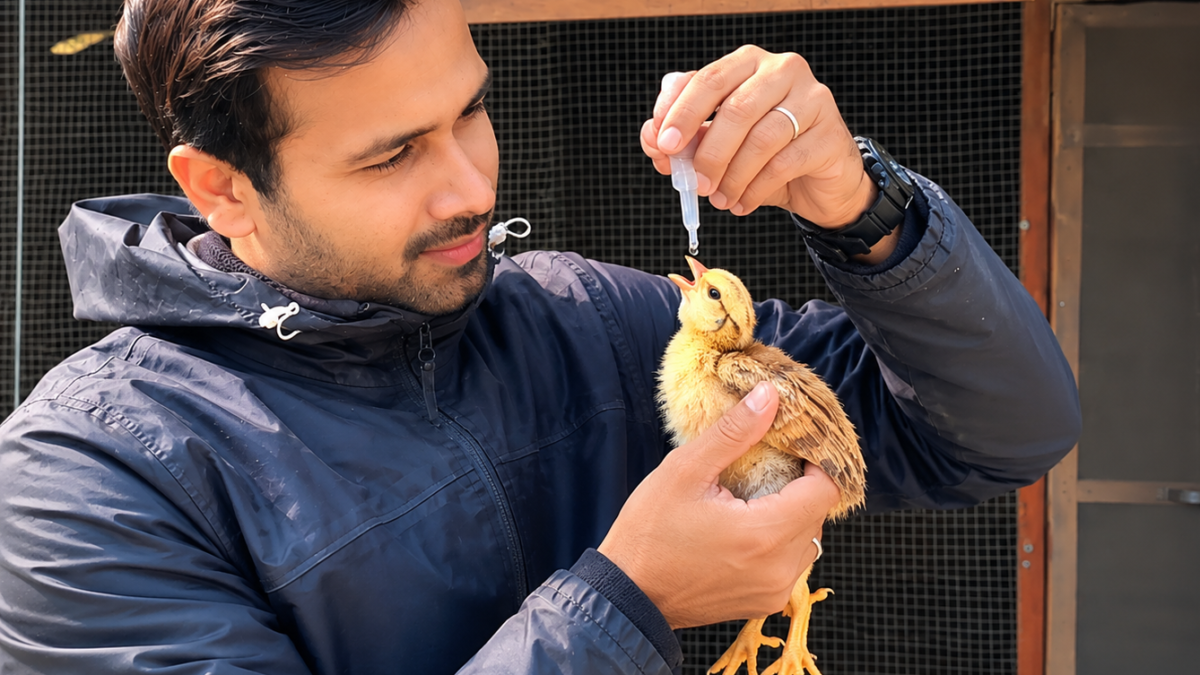
| Day 7 | Lasota Vaccine | Indovax | Eye Drop | As per manufacturer’s recommendation |
| Day 9 | ND + VVND Killed Vaccine | Killed Vaccine | Neck Injection | 0.2 ml |
| Day 14 | Gumboro Vaccine | Bursa B2K (Indovax) | Eye Drop | As per manufacturer’s recommendation |
| Day 40 | R2B Vaccine | Ranikhet Vaccine | Neck Injection | 0.2 ml |
| Every 30 Days | Lasota Vaccine | Live Vaccine | Drinking Water | As recommended |
Purpose of Each Vaccine
Marek’s Disease Vaccine
Protects chicks against Marek’s disease and should be administered during the first three days of life.
Lasota Vaccine
Provides protection against Newcastle Disease (Ranikhet Disease), one of the most common viral diseases in poultry.
ND + VVND Killed Vaccine
Offers additional protection against virulent strains of Newcastle Disease.
Gumboro Vaccine
Protects the immune organs of birds and reduces susceptibility to secondary infections.
R2B Vaccine
Provides long-term immunity against Newcastle Disease.
Beak Trimming Schedule
Proper beak trimming helps reduce:
- Feed wastage
- Cannibalism
- Feather pecking
- Bird injuries
| Age | Activity | Method |
| Day 25 | First Beak Trimming | Press against a hot blade |
| Day 45 | Second Beak Trimming | Press against a hot blade |
Avoid excessive trimming to prevent stress and reduced feed intake.
Chick Arrival Management
Newly arrived chicks experience transportation stress. Proper brooding management helps improve survival.
Step 1: Sugar Water
Immediately after arrival, provide sugar water for the first two hours to restore energy and hydration.
Step 2: Antibiotic Administration
After 72 hours:
- Dose: 1 ml per litre of water.
- Duration: 48 hours.
Provide one day of plain water before starting the next supplement.
ChickCoop® Liquid Supplement Schedule
To maintain good immunity and growth, follow the schedule below.
| Sequence | Supplement | Dosage | Duration |
| 1 | Antibiotic | 1 ml/Litre water | 48 Hours |
| 2 | Probiotics | 1 gram/Litre water | 48 Hours |
| 3 | Calcium Tonic | 1 ml/Litre water | 48 Hours |
| 4 | Vitamin B-Complex | 1 ml/Litre water | 48 Hours |
| 5 | AD3EC Tonic | 1 ml/Litre water | 48 Hours |
| 6 | Liver Tonic | 1 ml/Litre water | 48 Hours |
Provide one day of plain water between each supplement cycle.
Monthly Preventive Health Program
Every 30 days:
- Administer Lasota vaccine through drinking water.
- Repeat the liquid supplement schedule.
After the first month, increase the dosage of liquid supplements to:
1.5 ml per litre of drinking water
Continue each supplement for 48 hours, maintaining one day of plain water between treatments.
Essential Biosecurity Practices
Along with vaccination, ChickCoop® recommends:
- Maintaining clean drinking water.
- Keeping litter dry.
- Restricting visitors inside poultry houses.
- Regular disinfection of feeders and drinkers.
- Isolating sick birds immediately.
- Providing proper ventilation.
- Seeking veterinary advice whenever disease symptoms appear.
Why Choose ChickCoop® Country Chicks?
ChickCoop® Country Chicks are designed to provide farmers with:
✓ Strong immunity
✓ Better survivability
✓ Faster growth
✓ High adaptability to Indian conditions
✓ Better returns on investment
With proper management and vaccination, ChickCoop® Country Chicks can help farmers achieve sustainable and profitable poultry farming.
Conclusion
A successful poultry farm begins with healthy birds. By following the ChickCoop® Country Chicks Vaccination Schedule and maintaining proper biosecurity, farmers can significantly improve flock health, reduce mortality, and maximize profitability.
ChickCoop® farmsence™ remains committed to empowering poultry farmers through science-based farming practices, innovative solutions, and sustainable poultry management.
Disclaimer
Vaccination programs may vary depending on regional disease prevalence and veterinary recommendations. Farmers are advised to consult a qualified poultry veterinarian before implementing any vaccination or medication schedule.