Symptoms, Prevention & Cure in Poultry Farming
Running a profitable poultry farm is more than just feeding your flock and collecting eggs. The real success lies in keeping chickens healthy, preventing diseases, and acting quickly when health issues arise. Whether you manage a small backyard setup or a large commercial unit, understanding the symptoms, prevention methods, and cures for common poultry health issues can save you from devastating losses.
In this blog, we’ll explore practical strategies to safeguard your flock—from all-in, all-out management systems to biosecurity, disease detection, and treatment methods—so you can raise healthier birds and maximize productivity.
Prevention is Better Than Cure
All-In, All-Out Approach
The “all-in, all-out” method is one of the most effective ways to manage disease risk. In this system, the entire flock is raised together until they reach the end of their productive cycle. At that point, the entire group is replaced with a new one.
Before bringing in new birds, farmers:
- Thoroughly clean and sanitize the housing
- Replace litter and disinfect equipment
- Ensure the coop environment is disease-free
This simple step prevents young birds from being exposed to leftover pathogens and significantly reduces the spread of infections.
Biosecurity: The First Line of Defense
Biosecurity means taking every precaution to keep diseases out. Even one infected bird or contaminated shoe can wreak havoc on your flock. Effective biosecurity measures include:
- Limiting visitor access to the farm
- Disinfecting footwear, tools, and cages
- Quarantining new birds before mixing them
- Preventing contact with wild birds and rodents
Good biosecurity is not just a choice—it’s a necessity for every serious poultry keeper.
Spotting Disease Symptoms Early
Early disease detection can save both birds and money. Watch for these common warning signs:
- A sudden drop in egg production
- Lethargy, drooping wings, or unusual posture
- Dull, ruffled feathers or loss of body weight
- Swelling around the eyes or face
- Excessive thirst or refusal to eat
- Abnormal droppings (odd color, texture, or odor)
- Coughing, sneezing, or labored breathing
- Increased mortality within the flock
Since many diseases share similar signs, proper diagnosis often requires lab testing of sick or deceased birds.
Common Poultry Health Issues
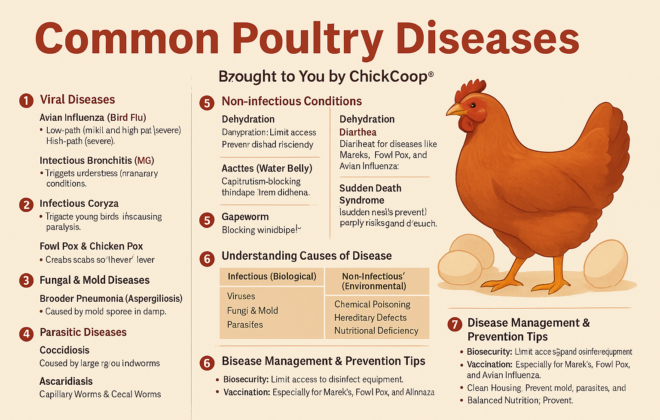
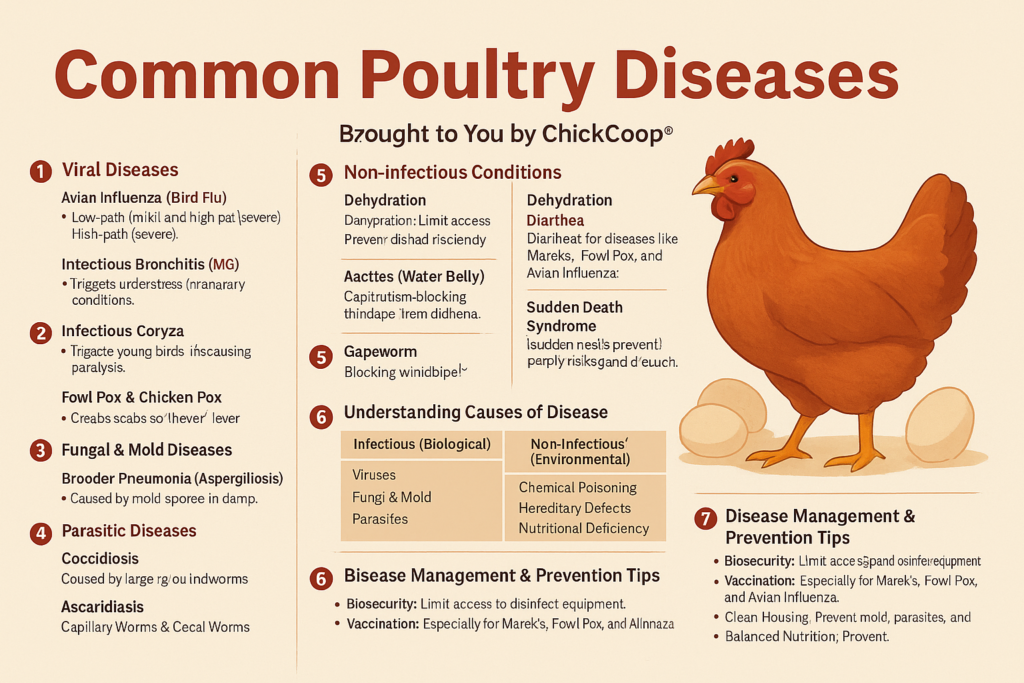
1. Non-Infectious Diseases
These arise from poor nutrition, toxins, or physical injuries. While not contagious, they can still reduce growth and egg output. Prevention comes down to balanced feed, stress reduction, and safe housing.
2. Respiratory Diseases
Chickens in dusty or poorly ventilated environments are highly vulnerable. Symptoms include sneezing, coughing, and discharge from eyes or nostrils. Prevention requires clean, well-ventilated coops with low ammonia levels.
3. Sour Crop
A fungal infection of the upper digestive tract, sour crop leads to a swollen, foul-smelling crop. Treatment includes:
* Gently massaging the crop while holding the chicken upside down
* Offering water with apple cider vinegar to restore pH balance
4. Droppings as Health Indicators
Chicken droppings provide powerful health clues:
* Normal: Brown to green with a white cap
* Bright yellow/green: Possible infection
* Bloody: Could indicate coccidiosis
* Watery in summer: Likely dehydration
By simply checking droppings, you can often spot problems before they escalate.
Treatment: What to Do if Your Chicken is Sick
The first step is isolation. Separating a sick bird protects the rest of your flock. Once isolated, you face two options: treat or cull.
Key points to remember:
* Many diseases progress quickly; by the time symptoms show, it may be too late
* Survivors often become carriers, spreading disease silently
* Birds that recover rarely regain their top laying or breeding potential
* Some infections require culling the entire flock to protect long-term farm health
When in doubt, consult a veterinarian or poultry specialist immediately.
The Role of Vaccination
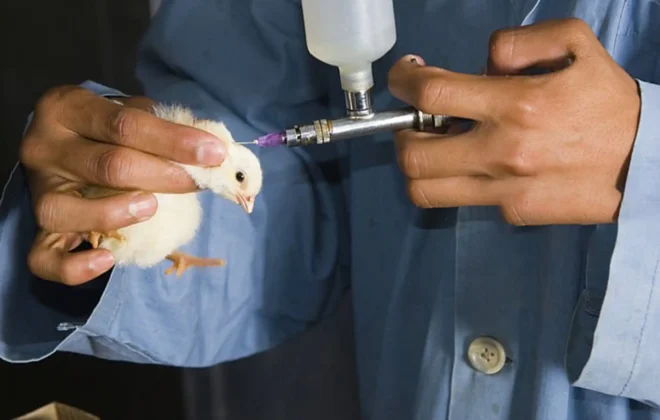
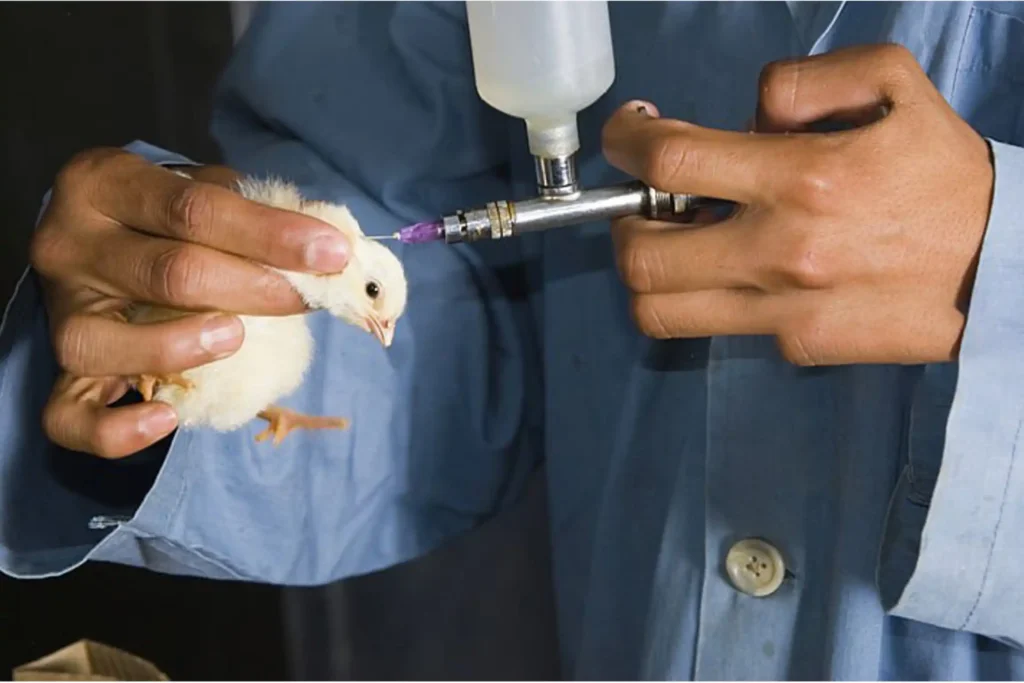
Vaccines remain one of the most reliable tools to prevent deadly viral infections such as:
* Newcastle disease
* Marek’s disease
* Fowl pox
* Infectious bronchitis
Not every disease requires vaccination. The right plan depends on local risks, farm history, and bird movement. If you attend poultry shows or buy from multiple sources, vaccination becomes even more critical.
Your veterinarian or local extension specialist can design a vaccination program tailored to your flock.
Take Action Before It’s Too Late
The health of your flock determines the profitability of your farm. Prevention through biosecurity, clean housing, vaccination, and early detection is always cheaper than dealing with a full-blown outbreak.
If you notice unusual symptoms, want to strengthen your farm’s biosecurity, or need help with vaccination planning, don’t wait until the problem spreads.
Call us today and get expert guidance to keep your flock safe, healthy, and productive.
At ChickCoop®, we’re more than just a Chicken Company, writing interesting blogs about them– we’re your trusted partner in building a modernized, sustainable and profitable farm. From breed selection to buy-back support, feed guidance, and modern farm management tips, we ensure farmers like you achieve the best results and profits.
Call us today to discuss your farming needs
📧 Email us at: write@chickcoop.in
📞 Call us: +91-9939209699
Your birds deserve the best care—and so does your farm.